A Decade of Discovery, a Decade of Collaboration
Advance RI-CTR celebrates 10 years.
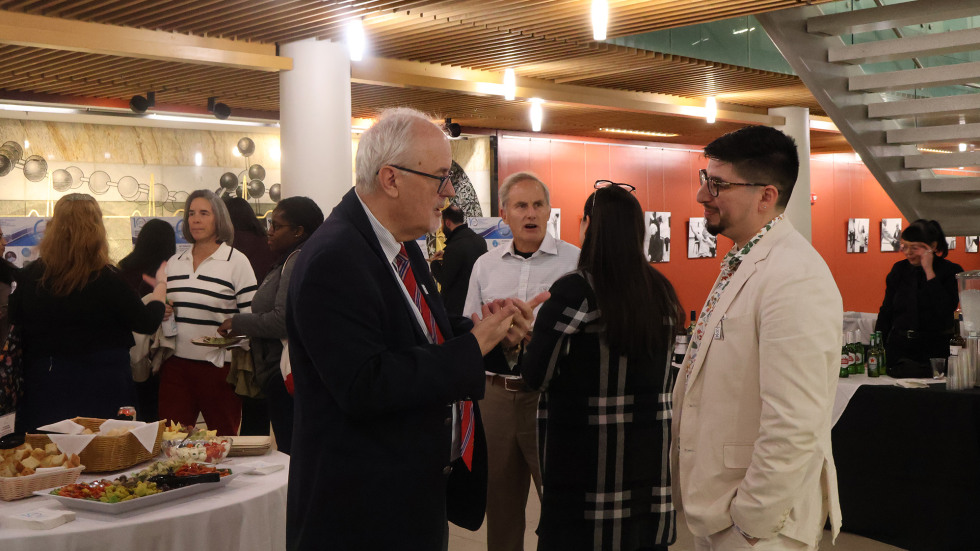
Keynote speaker Dr. Bill Powderly and Ruben G. Martinez, PhD
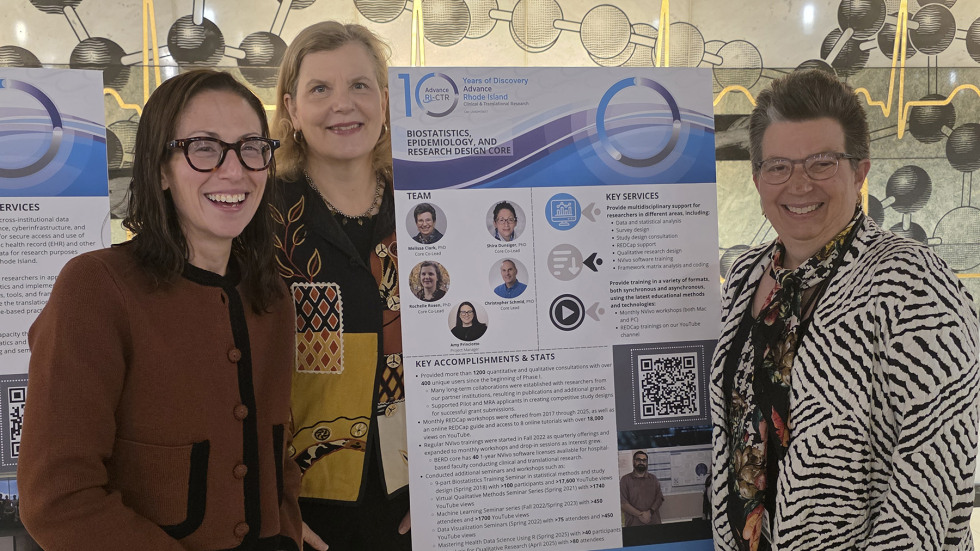
Left to right: Drs. Shira Dunsiger, Rochelle Rosen, and Melissa Clerk
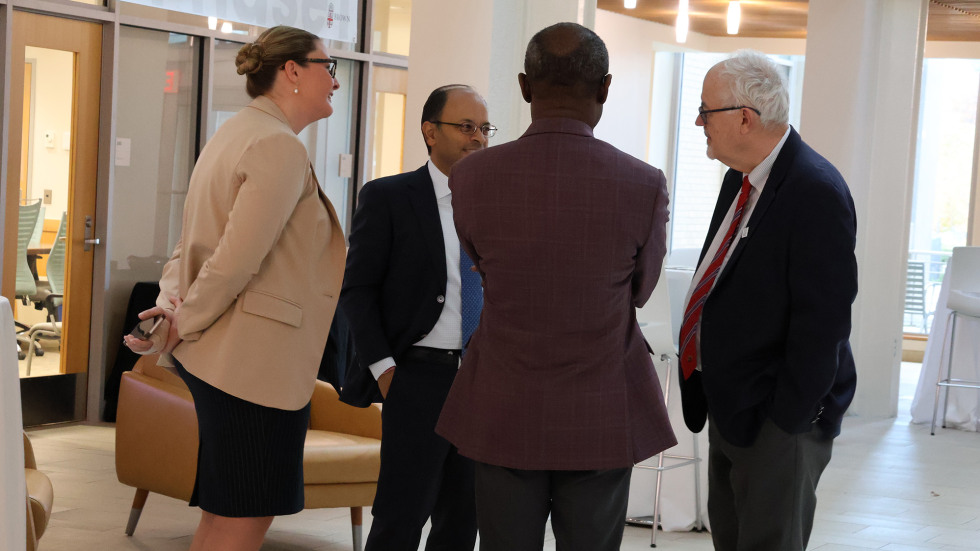
Left to right: Administrative Director Kerri Connolly, Dean Mukesh Jain, Dr. Methodius Tuuli, and Dr. Bill Powderly speaking before the celebration
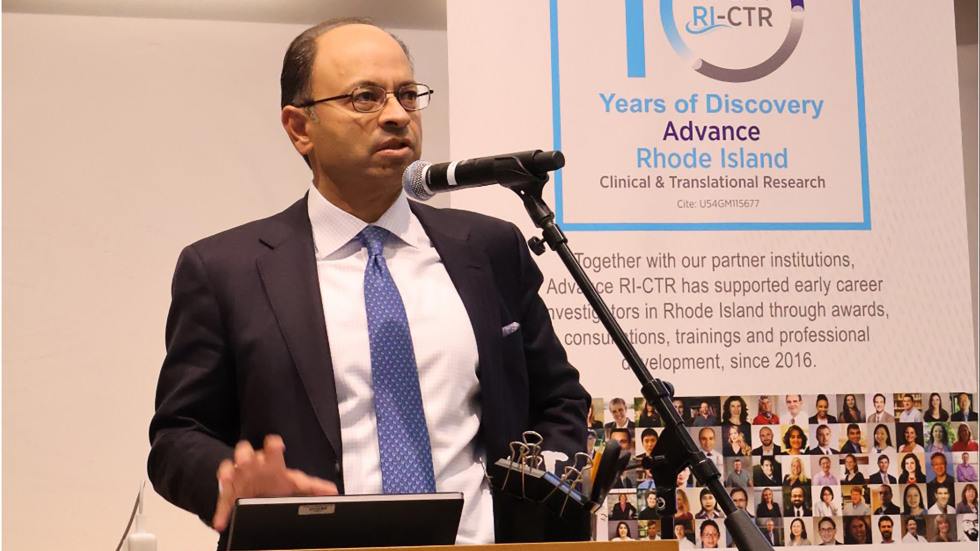
Dean Muskesh Jain delivering his remarks
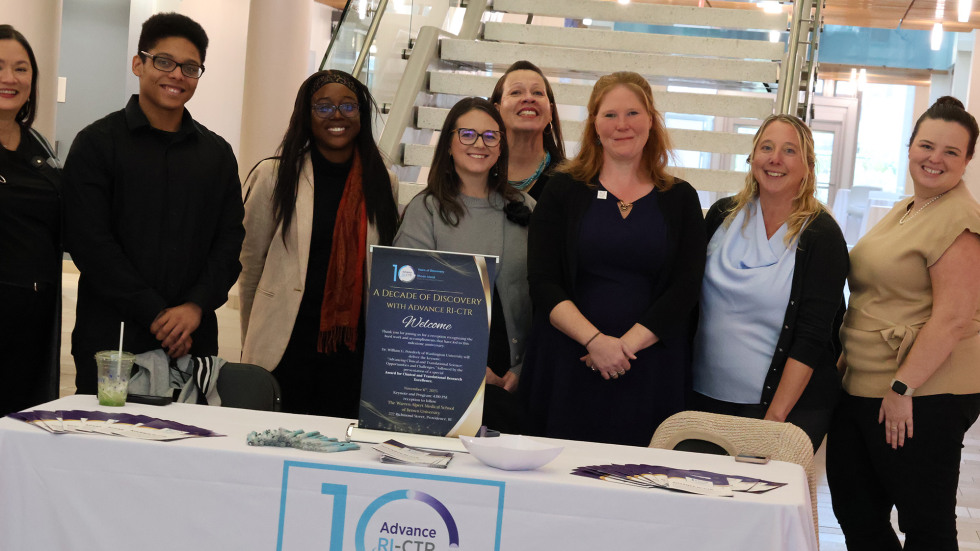
Advance RI-CTR admin staff
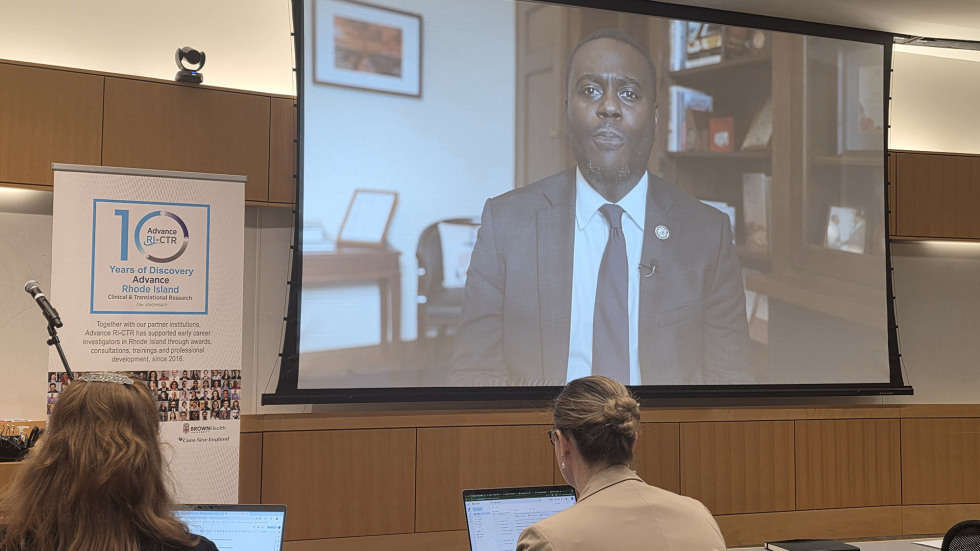
Congressman Gabe Amo delivering his remarks
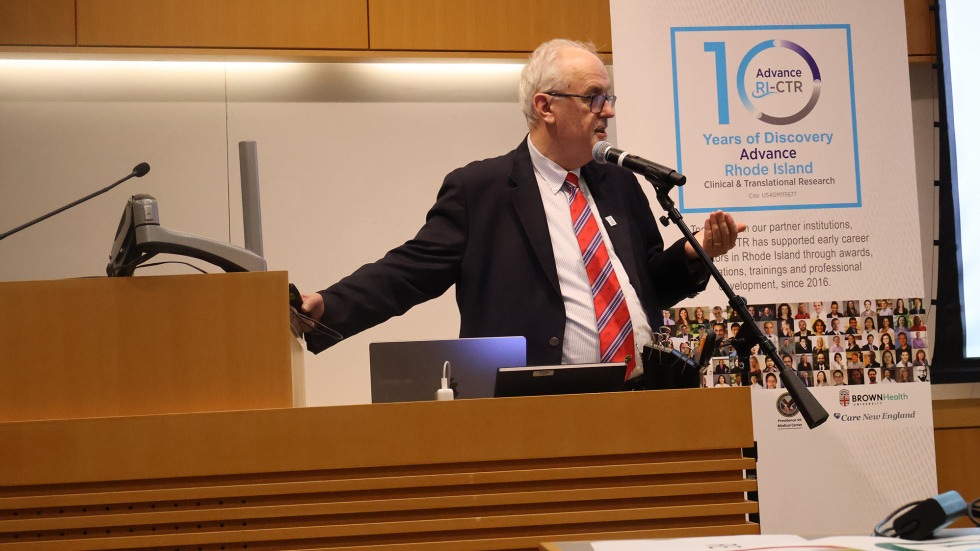
Dr. Bill Powderly delivering his keynote address
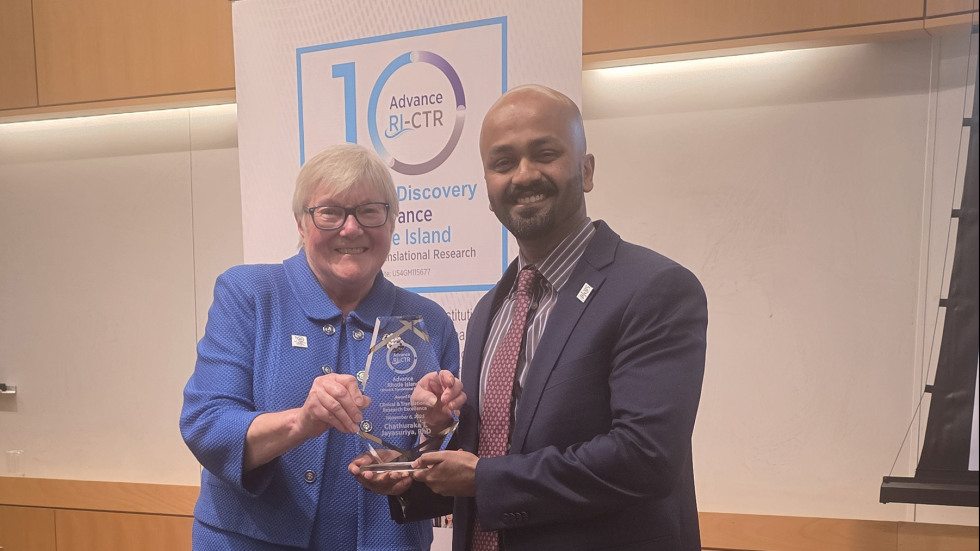
Dr. Sharon Rounds and Dr. Chathuraka Jayasuriya with his award
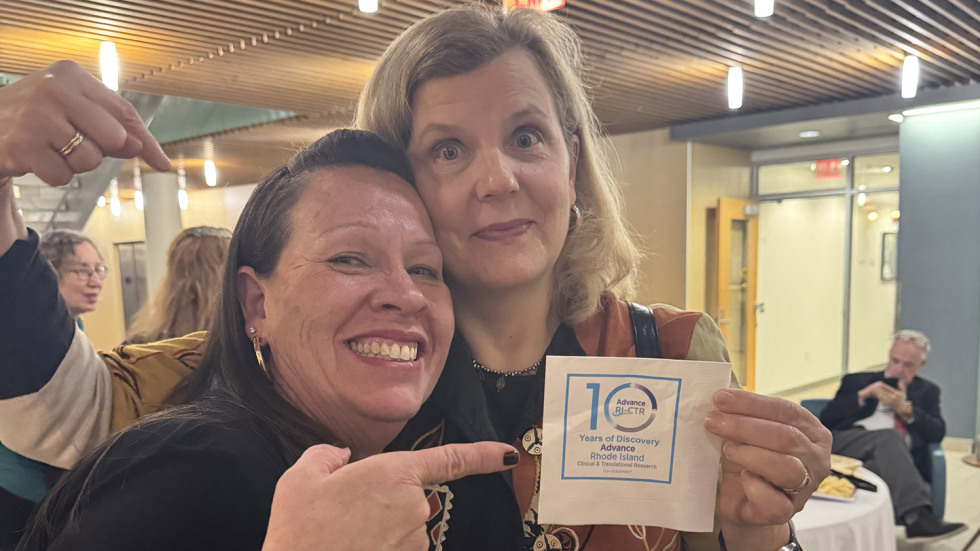
Hilda Castillo and Rochelle Rosen, PhD
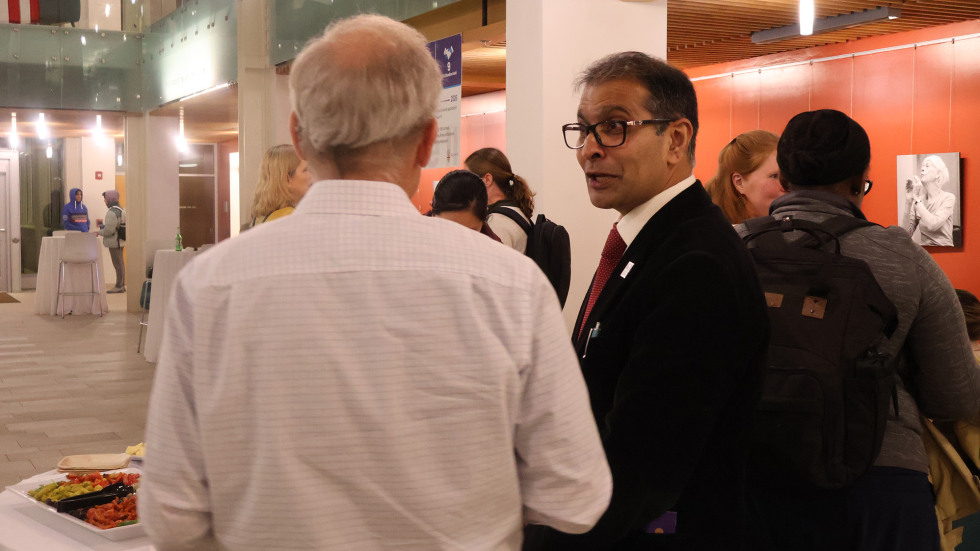
Christopher Schmid, PhD and Gaurav Choudhary, MD
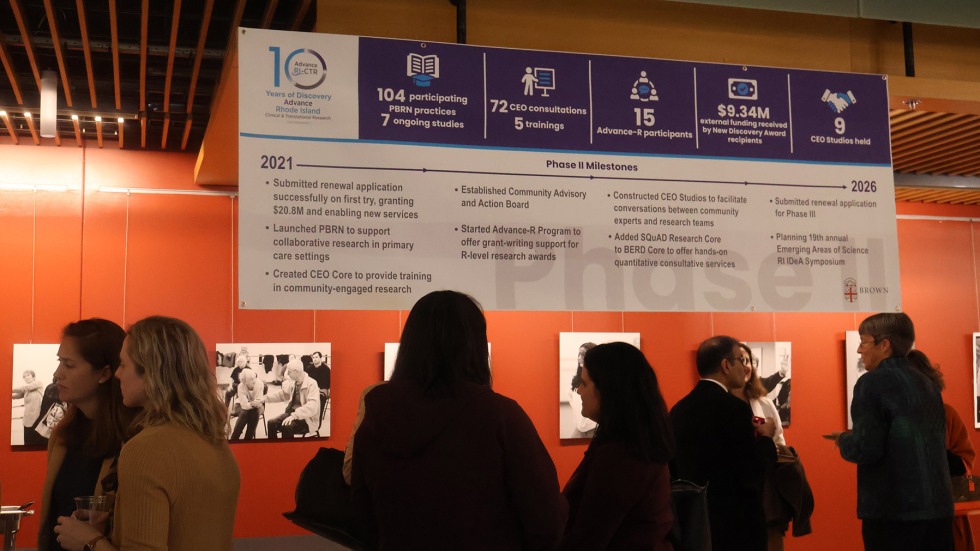
A Timeline of Research in Phase II
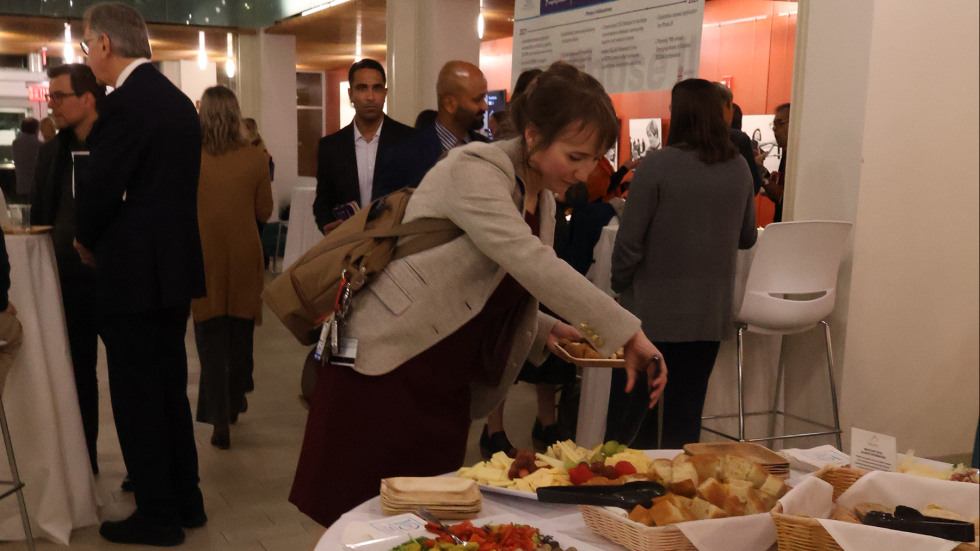
Frances Terry, MPH and others enjoy the cocktail reception
On the evening of November 6th, 2025 at The Warren Alpert Medical School, Rhode Island’s own Clinical Translational Research initiative (Advance RI-CTR) hosted a celebration as the program enters its tenth year.
This milestone marks a new beginning for Advance RI-CTR. After 10 years of success with Phases I and II of the program, Program Director Sharon Rounds, MD spoke on what the future holds for Advance RI-CTR in Phase III.
“The next phase will expand core services, deepen collaborations, and focus upon improving our current network to include more local, community, and national partners,” said Rounds. “A major focus of Phase III is for Advance RI-CTR to become a ‘networked’ CTR.”
Collaboration and teamwork
For the many in attendance at the celebration and cocktail event, the story of the last ten years of Advance RI-CTR was a story of collaboration and teamwork. “Looking back over ten years ago when we first started hammering out the outlines of our first proposal,” said Program Coordinator Ed Hawrot, PhD, “it was a real teambuilding exercise.”
Rounds agreed, stating it has “been teamwork that has brought together people from all our institutional partners to work together towards one goal. And so this teamwork has been really quite remarkable and I think is the secret sauce of the success of Advance RI-CTR.”
Teamwork is at the heart of what all CTR programs do. Researchers are isolated in their islands of expertise, but it is translational science that helps bridge the gap between those islands—transporting research from theory to clinical trials to real-world health outcomes.
Bill Powderly, MD, of Washington University in St. Louis spoke to this in his keynote address. “We need infrastructure to support our researchers,” said Dr. Powderly. “It’s redundant and inefficient to keep reinventing the wheel, so you need that infrastructure to provide the coordination and support.”
If translational science is the infrastructure that helps bridge research islands, CTR programs nationwide are the engine that help drive that research in the quickest and most efficient way possible.
Audra Van Wart, PhD and Co-Lead of Advance RI-CTR’s Professional Development Core, had this to say, “Advance [RI] CTR provides programs and resources that are a catalyst for new discoveries, but the energy source is the shared curiosity, commitment and collaboration.”
As Dr. Rounds said, Advance RI-CTR has the goal of being a “networked” CTR—essentially an interstate system for research. But what does that mean for Rhode Island?
More than turning Rhode Island into a hub of the interstate system, Advance RI-CTR is also developing industry in the Ocean State. As congressman Gabe Amo said in his remarks, “When we fund programs like Advance RI-CTR, we are not just advancing science, but strengthening our communities. We’re also creating jobs.”
Associate Professor of Psychiatry and Human Behavior Chrystal Vergara-Lopez, PhD agreed, stating, “It advances the science and keeps scientists in Rhode Island. That’s what it has done for me, and so I hope it will be another 10 years!”
What are we getting for our money?
Senior Vice President for Health Affairs and Dean of Medicine and Biological Sciences, Mukesh Jain, MD also spoke at the celebration, and highlighted the great work that Advance RI-CTR has achieved.
“Over the past decade, Advance [RI] CTR has demonstrated extraordinary returns on investments. For every dollar invested in network investigators…there has been a twelve dollar return in extra-mural funding across our partners. So that is more than $132 million in external funding over the past ten years. I think that deserves a round of applause!”
While no researcher can work without funding, it is important that programs like Advance RI-CTR consider how that funding is allocated.
As Dr. Powderly said in his address, “Investment in healthcare in the United States has grown more than any other country in the world. Yet our health outcomes have actually fallen behind most of the advanced world.” And so the question that informed citizens and politicians are asking is “What are we getting for our money?”
“It is critical,” said Dr. Powderly, “for the future of biomedical research, for the future of our economy as a country—that we think through that question and are prepared to answer it.”
And these are questions that Advance RI-CTR is preparing to answer, as it reaches for the goal of another 10 years, no simple task.
And that task will require focusing on the outcomes—outcomes that “reflect more than just financial returns,” said Dr. Vergara-Lopez—outcomes that “represent momentum, collaboration, and a growing ecosystem of discovery across our state that’s building careers and communities.”
As Dr. Powderly says, “It isn’t good enough to say we do it for the sake of science itself.” If translational science is a bridge, “It can’t be a bridge to nowhere. It has to be a bridge to improvement in human health.”
An award for Clinical and Translational Research Excellence
The speaking program ended with an award. “We thought it would be kind of fun to celebrate our ten-year anniversary by offering an award to an investigator,” said Dr. Rounds, “who has been engaged with Advance RI-CTR and who has demonstrated excellence in research as well as career progression.”
And so the Advance RI-CTR Award for Clinical and Translational Research Excellence went to Dr. Chathuraka Jayasuriya, PhD, Associate Professor of Orthopaedics at The Warren Alpert Medical School of Brown University and Rhode Island Hospital (affectionately known as “Chat”).
You can read more about Dr. Jayasuriya and his research in the recent feature article.